Medical Laser Therapy in Bend, Oregon
Physician-led medical laser therapy in Bend, OR for sports injuries, tendon pain, and chronic conditions.
If joint pain, tendon injuries, or chronic soft tissue conditions are keeping you from the activities you care about, medical laser therapy may be worth discussing. At High Desert Sports & Spine, we use high-intensity Class IV laser therapy as one part of a physician-directed orthopedic and sports medicine practice in Bend, Oregon — not a standalone service, and not a one-size solution.
Our fellowship-trained and board-certified physicians evaluate laser therapy within the full context of your musculoskeletal health. If it’s appropriate for your condition, we’ll tell you how it works, what to expect, and how it fits into your broader treatment plan. If something else is a better fit, we’ll tell you that too.
Same-week appointments are typically available for new patients across Central Oregon.
What Is Medical Laser Therapy?
Medical laser therapy — also called high-intensity laser therapy, deep tissue laser therapy, or Class IV laser therapy — uses focused light energy to stimulate a healing response at the cellular level. It is FDA-cleared, non-invasive, and requires no downtime.
The mechanism is called photobiomodulation (PBM). In short: when specific wavelengths of laser light are delivered to injured or inflamed tissue, the light energy is absorbed by the mitochondria — the energy-producing structures inside cells — which triggers a series of biological responses. Those responses include increased circulation, reduced inflammation, accelerated cellular repair, and reduced pain signaling.
A few distinctions worth understanding:
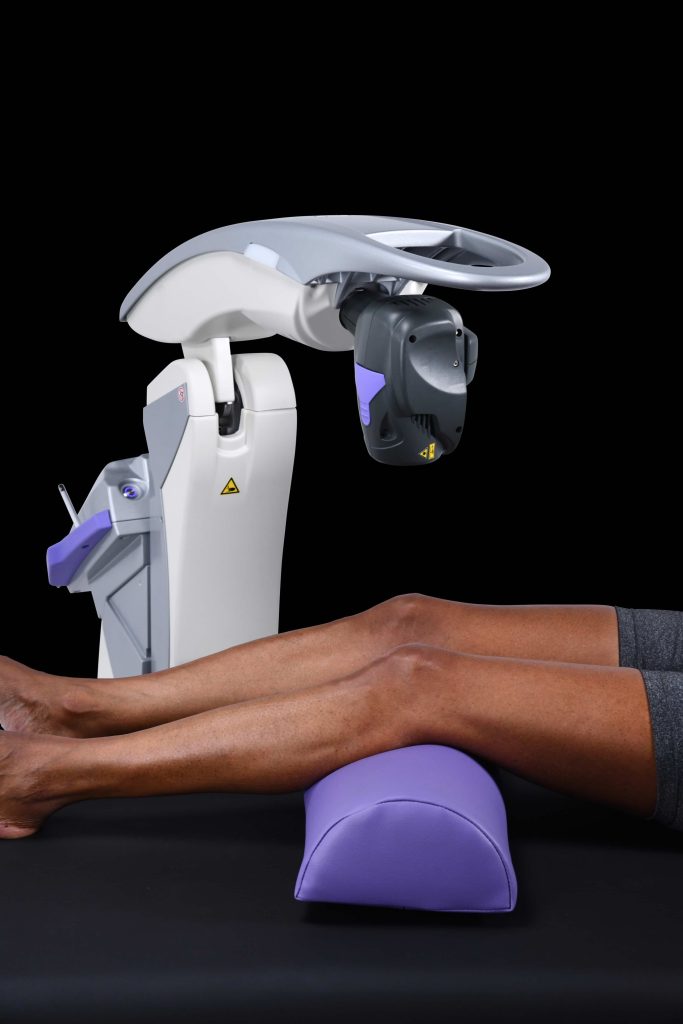
- Class IV laser therapy uses high-power output (above 500 milliwatts) to penetrate deeply into tissue — reaching muscles, tendons, joints, and even bone. This is what we use at HDSS.
- Class III “cold laser” therapy uses much lower power and penetrates only the surface layer of tissue. It is used in some chiropractic and physical therapy settings, but operates through a different mechanism and at a different depth.
- Red light therapy panels and cosmetic lasers are surface-level devices used for skin conditions. They are not the same as Class IV medical laser therapy.
At High Desert Sports & Spine, medical laser therapy is administered by trained clinical staff and overseen by our physician team as part of a coordinated treatment plan.
How Medical Laser Therapy Works at High Desert Sports & Spine
Our process is physician-directed from the start. Here’s what a typical course of treatment involves:
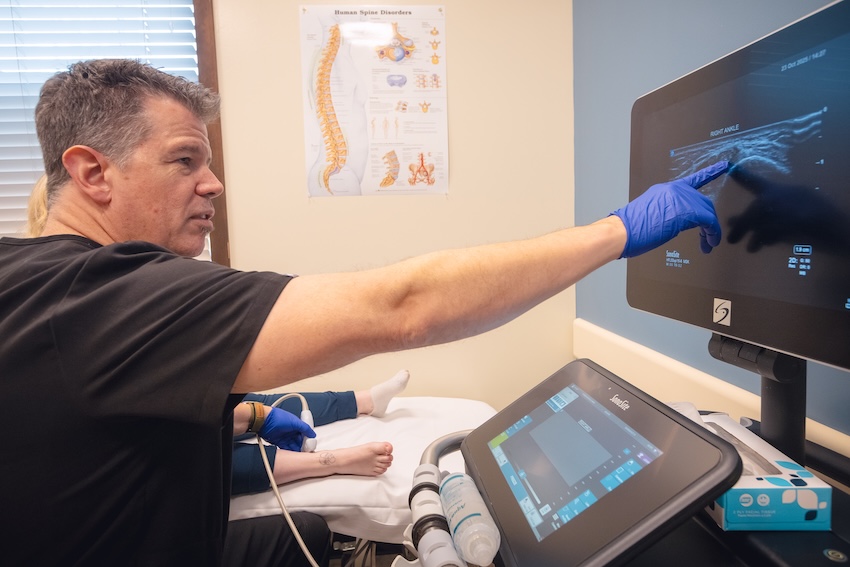
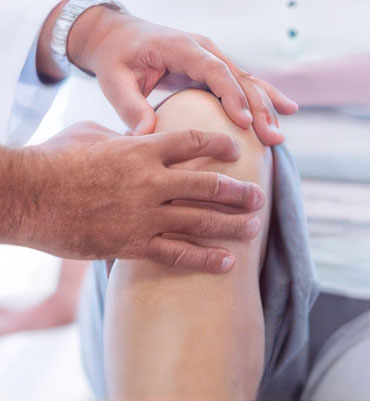
- Evaluation first: Laser therapy is recommended only when clinically appropriate for your condition. Your appointment begins with a specialty evaluation — a review of your symptoms, medical history, any imaging, and your goals. We’ll discuss whether laser therapy makes sense for your situation or whether another approach is better suited.
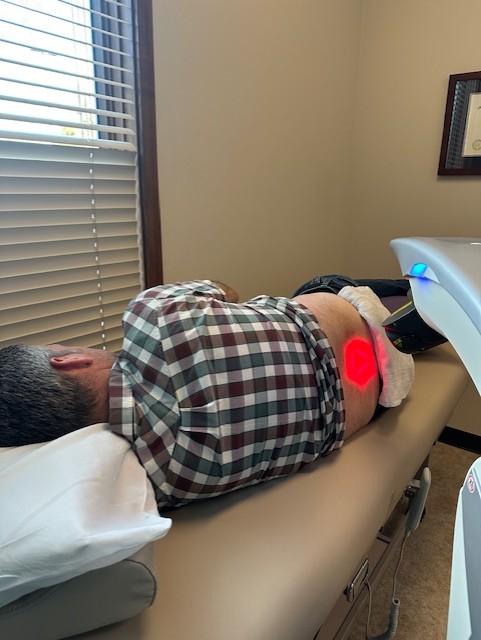
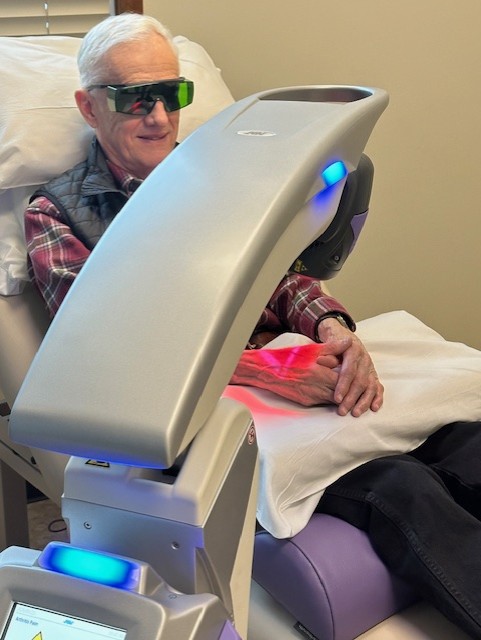
- Positioning and setup: You’ll be positioned comfortably — sitting or lying down — with the treatment area exposed. Protective eyewear is worn by both you and the treating clinician, as required by laser safety protocol. No injections, no incisions, no medications.
- Treatment session: The laser handpiece is moved over the treatment area in a deliberate, controlled pattern. Most patients feel a gentle, soothing warmth during the session. Treatment sessions typically take 5 to 15 minutes, depending on the size of the area, the depth of the condition, and the treatment protocol for your diagnosis.
- Post-session guidance: There is no downtime after a laser therapy session. Most patients return to normal activity the same day. You’ll receive guidance on what to expect as treatment progresses, how many sessions are likely appropriate for your condition, and how to support the healing process between visits.
- Monitoring and follow-up: Your progress is monitored throughout. If laser therapy is being used as part of a broader treatment plan — alongside PRP, shockwave therapy, or a rehabilitation program — we’ll coordinate those components together.



Conditions We Commonly Address with Medical Laser Therapy
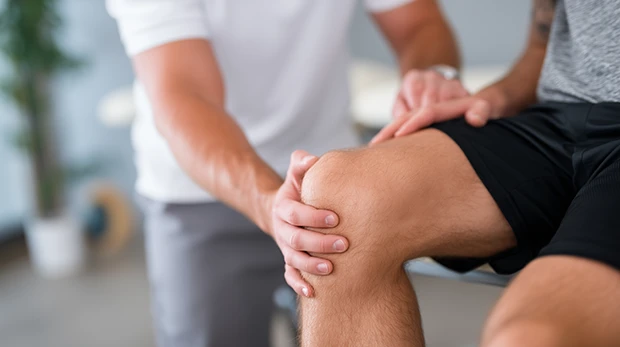
Medical laser therapy may be considered for a range of orthopedic and sports medicine conditions — particularly when tissue healing has stalled, pain is limiting activity, or conservative care has provided only partial relief. Conditions our physicians commonly evaluate in this context include:
- Acute sports and activity injuries — sprains, strains, muscle injuries, and contusions. Laser therapy delivered early after an acute injury may help reduce inflammation and support the initial healing response.
- Tendinopathy and tendon injuries — Achilles tendinopathy, patellar tendinopathy (jumper’s knee), rotator cuff tendinopathy, hamstring tendinopathy, and lateral/medial epicondylitis (tennis elbow, golfer’s elbow). Tendons have limited blood supply, which is one reason they can be slow to heal — laser therapy targets this limitation directly.
- Plantar fasciitis — one of the most common conditions treated with laser therapy, with meaningful evidence base for high-intensity laser in both pain reduction and tissue response.
- Knee pain and joint conditions — osteoarthritis, bursitis, and soft tissue conditions around the knee joint. Laser therapy may be used as a standalone treatment or alongside PRP when appropriate.
- Shoulder pain — including rotator cuff conditions, subacromial pain, and soft tissue injuries around the shoulder joint.
- Back and neck pain — muscle-related pain, paraspinal tension, and soft tissue components of spine conditions. Laser therapy targets the tissue layer; it does not replace interventional spine evaluation when structural issues are present.
- Post-procedure recovery support — laser therapy can be used as an adjunct following PRP injections or shockwave therapy to support the healing environment and reduce post-procedure soreness.
- Delayed onset muscle soreness (DOMS) and athletic recovery — for competitive and recreational athletes, laser therapy is used in training and recovery contexts to reduce recovery time between sessions.
Not every condition responds equally to laser therapy, and not every patient is a good candidate. A physician’s evaluation is the right starting point. If laser therapy is not appropriate for your situation, we’ll tell you what is.
Who May Benefit from Medical Laser Therapy?
Medical laser therapy may be worth discussing if you:
- Have a tendon, soft tissue, or joint condition that has not responded fully to rest, physical therapy, or anti-inflammatory medications
- Are looking for a non-invasive option to support healing without injections or surgery
- Are dealing with an acute injury and want to support early recovery alongside your rehabilitation
- Are active or athletic and want to reduce downtime and support tissue recovery between training sessions
- Have chronic pain that has been managed but not resolved, and want to explore additional non-pharmacological options
- Are recovering from a procedure — including PRP or shockwave therapy — and want to support the healing environment
Laser therapy is generally well-tolerated. Certain medications (particularly photosensitizing drugs), active infections, and some health conditions may affect candidacy or require additional consideration. Your physician will review relevant factors during your evaluation.


What to Expect at Your Medical Laser Appointment
Your first visit is an evaluation, not a procedure. Here’s how the process typically unfolds:
- Specialty evaluation: We review your symptoms, medical history, any prior imaging or treatment, and your goals. We determine whether laser therapy is appropriate for your condition and how it fits into your overall care plan.
- Clear options: You’ll learn what’s contributing to your problem, which treatment approaches may apply, and what realistic expectations look like for your specific situation. If laser therapy isn’t the right fit, we’ll discuss what is.
- Personalized plan: If laser therapy is recommended, we’ll outline the number of sessions likely needed, the treatment schedule, and how it coordinates with any other care you’re receiving. Some conditions respond in a small number of sessions; others benefit from a longer series. We’ll give you a clear picture based on your diagnosis.
- Treatment: Sessions are performed in the office and typically take 5 to 15 minutes. No injections. No recovery time. Most patients feel a gentle warmth during treatment. Many report feeling relief during or shortly after the session, though lasting results generally develop over a course of treatment.
- Follow-up and monitoring: We track your progress and adjust the plan as needed. If laser therapy is part of a broader treatment plan, we coordinate those components to work together.
Our goal throughout is clarity — not pressure. You’ll leave every visit understanding what was done, why it was done, and what to expect next.
Why Choose High Desert Sports & Spine for Laser Therapy in Bend, Oregon?
There are several providers offering laser therapy in Bend. Here’s what’s different about our approach.
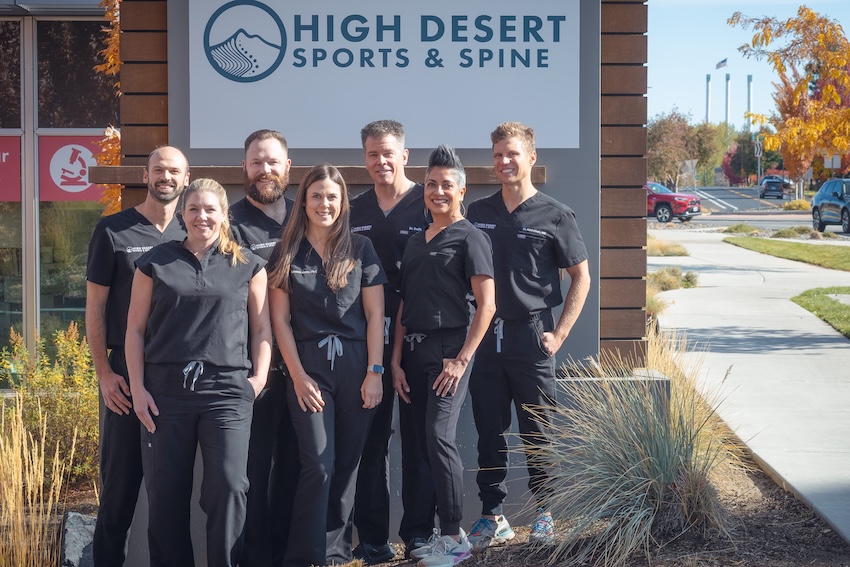
Physician-Led, Fellowship-Trained Expertise
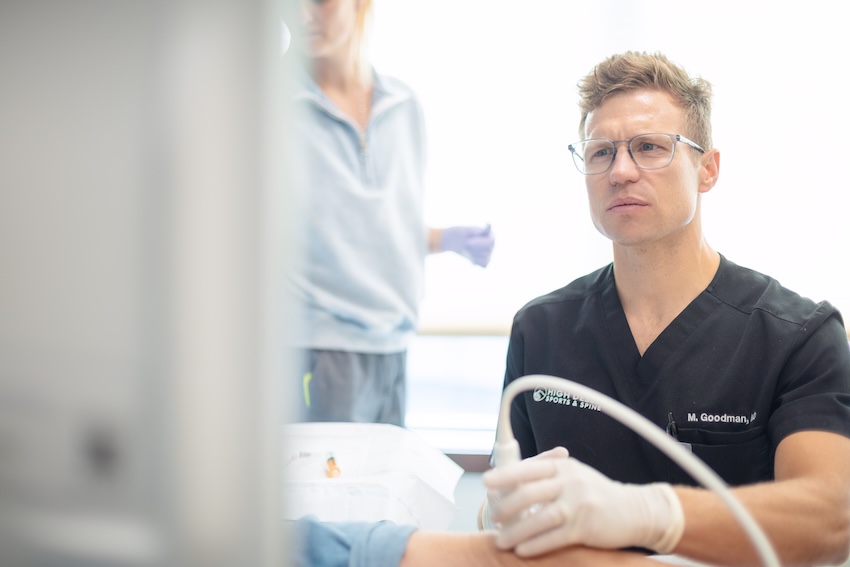
Medical laser therapy at High Desert Sports & Spine is evaluated and overseen by board-certified, fellowship-trained physicians who specialize in musculoskeletal and orthopedic medicine. That’s a meaningful distinction in this category. Many other laser therapy providers in Bend hold certificate-level credentials in laser operation, a different level of training than that of a physician who has completed residency and advanced fellowship training in sports medicine or interventional orthopedics.
Knowing whether laser therapy is appropriate for your condition, and how it fits into your overall care, requires the kind of clinical judgment that comes from specialist-level training. We bring that to every evaluation.
Integrated Into a Comprehensive Treatment Approach
We’re not a standalone laser clinic. HDSS is a physician-owned interventional spine and sports medicine practice, and laser therapy is one tool in a comprehensive set. If laser therapy is the right call for your condition, we recommend it. If PRP makes more sense, or if a combination of laser therapy and shockwave therapy (ESWT) is better suited to what you’re dealing with, we’ll build a plan around what’s actually indicated.
We also work closely with physical therapists, orthopedic surgeons, and primary care providers across Central Oregon. If your condition calls for something outside our scope, we make sure you get to the right place.
Honest Expectations
Medical laser therapy is not a cure, and we won’t position it as one. The research is genuinely promising across a range of musculoskeletal conditions, but results depend on the condition, the individual, and how laser therapy is integrated into the overall treatment approach. Our goal is to give you an accurate picture of what laser therapy may offer for your specific situation — so you can make an informed decision without the pressure of a sales environment.
Same-Week Access, Without the Wait
New patient appointments for evaluations are typically available within the same week. We serve patients across Central Oregon — including Bend, Redmond, Sisters, Prineville, La Pine, and Sunriver — without the month-long waits common at larger health systems.

Frequently Asked Questions About Medical Laser Therapy in Bend, Oregon
Medical laser therapy — also called high-intensity laser therapy or deep tissue laser therapy — is an FDA-cleared, non-invasive treatment that uses focused light energy to stimulate tissue healing at the cellular level. It works through a process called photobiomodulation (PBM), which triggers biological responses including reduced inflammation, increased circulation, and accelerated cellular repair. At HDSS, it is used as part of a physician-directed orthopedic and sports medicine practice.
Photobiomodulation (PBM) is the mechanism through which laser therapy works. When specific wavelengths of light are absorbed by tissue, they interact with the mitochondria inside cells — triggering a biological cascade that increases cellular energy production, reduces inflammation, and supports tissue repair. It is the same underlying mechanism whether the treatment is called medical laser therapy, deep tissue laser therapy, or Class IV laser therapy.
Class IV laser therapy uses high-power output (above 500 milliwatts) to penetrate deeply into tissue — reaching muscles, tendons, joints, and bone. This is the type of laser we use at HDSS. Cold laser therapy (Class III) uses much lower power and operates primarily at the tissue surface. It has different applications and penetrates much shallower depths. The two are not interchangeable.
We commonly use medical laser therapy for acute sports injuries; tendinopathy (Achilles, patellar, rotator cuff, tennis elbow, golfer’s elbow, hamstring); plantar fasciitis; knee pain and osteoarthritis; shoulder conditions; back and neck pain with a soft-tissue component; and post-procedure recovery support. A physician evaluation is required to determine whether laser therapy is clinically appropriate for your specific situation.
This depends on your condition, how long you’ve had it, and how your body responds. Acute injuries may show a meaningful response in fewer sessions — sometimes three to five. Chronic or degenerative conditions typically require a longer course of treatment, often six to twelve sessions spaced over several weeks. Your physician will outline a recommended treatment plan based on your evaluation and adjust it as needed based on your response.
Most sessions take between 5 and 15 minutes, depending on the size of the treatment area, the depth of the targeted tissue, and the protocol for your condition. There is no downtime afterward — most patients return to their normal activities the same day.
Medical laser therapy is generally well-tolerated. Most patients feel a gentle, soothing warmth during treatment. Some patients notice a mild temporary increase in soreness in the treatment area in the first day or two after a session, particularly early in the treatment course — this is a normal response as the tissue begins to respond. It typically resolves quickly. If you experience significant discomfort, let us know and we’ll adjust the protocol.
Medical laser therapy is not covered by health insurance and is considered an out-of-pocket expense. Coverage can vary by payer and plan, so we recommend contacting your insurer directly for the most current information. HSA and FSA funds are typically accepted for this type of treatment — check your plan details. Our team can discuss self-pay options with you during your consultation.
Yes. Medical laser therapy is often used alongside other interventional and rehabilitative approaches. It can be a useful adjunct following PRP injections to support the healing environment, or used in combination with shockwave therapy (ESWT) for certain tendon conditions. In some cases, a structured combination approach produces better outcomes than any single treatment in isolation. Your treatment plan will be tailored to your specific condition.
No referral is required. You can contact our office directly to schedule a consultation and evaluation. Our team will help you determine whether laser therapy is appropriate for your condition and what the right next step looks like.
Medical Laser Therapy in Bend, Oregon — Talk with Our Team
If you’re exploring medical laser therapy in Bend, Oregon, and want an honest evaluation from fellowship-trained orthopedic physicians, High Desert Sports & Spine is here to help.
We’ll start with a thorough evaluation, give you a clear picture of whether laser therapy is appropriate for your condition, and walk you through the options — without pressure and without overpromising what this treatment can do.
Same-week appointments are usually available for new patients. We serve Bend, Redmond, Sisters, Prineville, La Pine, Sunriver, and patients throughout Central Oregon.