
SI Joint & Hip Pain Treatment in Bend, Oregon
At High Desert Sports & Spine, our fellowship-trained, board-certified physicians evaluate and treat SI Joint & Hip pain in Bend, Oregon, with a focus on non-operative and interventional options.
Hip pain is one of the most commonly mislabeled problems we see. Pain in the buttock gets called sciatica. Pain on the outside of the hip gets called bursitis. Pain that is actually coming from the sacroiliac joint gets treated as low back pain for months.
None of those labels are harmless. They send people down treatment paths built for a different problem, which is why so many patients arrive having already tried several things without much to show for it.
At High Desert Sports & Spine, our fellowship-trained, board-certified physicians evaluate hip and SI joint pain in Bend, Oregon, using in-office ultrasound and targeted diagnostic testing. We identify which structure is causing your pain before we treat anything, because in this part of the body, that step determines everything that follows.
Same-week appointments are usually available for new patients.



Why Hip and SI Joint Pain Is So Often Misdiagnosed
The hip, the pelvis, and the lower spine sit close together and share overlapping nerve supply. Several different structures can produce pain in nearly the same spot.
Where your pain actually sits is one of the more useful clues:
- Groin and deep front of the hip. Usually points to the hip joint itself. Arthritis and labral problems typically live here, not on the outside of the hip.
- Outside of the hip, over the bony point. Usually the gluteal tendons. This is the pain that makes it hard to lie on that side at night.
- Just below the belt line, off to one side. Often the sacroiliac joint.
- Deep in the buttock, worse with sitting. Could be the SI joint, the proximal hamstring tendon, the piriformis and surrounding structures, or a nerve.
- Groin or lower abdomen, especially after surgery. Frequently a nerve rather than a joint or tendon.
This is a starting framework, not a diagnosis. Plenty of people have more than one thing going on. But it explains why a careful history and exam matter more here than almost anywhere else, and why imaging alone often is not enough.
When Hip or SI Joint Pain Needs a Specialist
Consider a specialty evaluation if you are experiencing:
- Hip or buttock pain lasting more than 6 weeks without meaningful improvement
- Pain that wakes you up when you lie on that side
- Deep buttock pain that is worse the longer you sit
- Groin pain with walking, pivoting, or getting in and out of the car
- Pain that has been treated as sciatica or low back pain without improving
- A limp, or the feeling that the hip is giving way or catching
- Groin or lower abdominal pain that started after hernia repair, a C-section, or other pelvic surgery
- Pain that persisted after hip surgery or SI joint treatment
Sudden severe hip pain after a fall, particularly if you cannot bear weight, needs prompt evaluation to rule out a fracture. Our Orthopedic Urgent Care offers same-day or next-day appointments for acute injuries.










Hip & SI Joint Conditions We Evaluate and Treat in Bend, OR
Sacroiliac (SI) Joint Pain, Arthritis, and Dysfunction
The SI joints connect the base of the spine to the pelvis. They move very little, but they transfer a great deal of load and are a common, often-missed source of pain.
SI joint pain is usually one-sided and centered just below the belt line, often at a spot patients can point to with one finger. It can refer to the buttock, groin, or back of the thigh. Rolling over in bed, standing on one leg, climbing stairs, and getting out of a car are typical aggravators.
Because that area is assumed to be lumbar spine territory, many patients arrive having been treated repeatedly for a disc or facet problem without improvement. Image-guided injection into the joint does double duty here: it treats the joint and, by whether it relieves your pain, tells us whether we found the right structure. For pain that returns after a good response, radiofrequency ablation of the small sacral nerves supplying the joint can provide longer relief.
Gluteal Tendinopathy and “Trochanteric Bursitis”
If you have pain on the outside of your hip and it hurts to lie on that side, this is probably your problem. It is also probably not bursitis, despite what you may have been told.
For years, people attributed lateral hip pain to inflammation of the trochanteric bursa. Imaging studies changed that picture. When patients with lateral hip pain are scanned, most show tendon changes in the gluteus medius or minimus, and isolated bursitis without tendon involvement is uncommon. The condition is now generally called greater trochanteric pain syndrome, and the gluteal tendons are understood to be the main source.
Why the distinction matters: bursitis implies inflammation, which implies a cortisone injection. Tendinopathy is a tissue degeneration problem, and the research on cortisone for this condition is not encouraging over the long term. Patients often feel better for a few weeks and then find themselves back where they started, sometimes worse.
The strongest evidence for gluteal tendinopathy supports education and progressive tendon loading. We will say that plainly even though it is not a procedure, and we coordinate closely with physical therapists across Central Oregon who do this well. Where interventional treatment helps is in cases that have stalled despite good rehabilitation, or where pain is severe enough that meaningful loading is not possible yet. Ultrasound lets us confirm the tendon changes and rule out a full-thickness tear, and options including shockwave therapy and PRP may be appropriate depending on what we find.
Piriformis Syndrome and Deep Buttock Pain
Deep buttock pain that worsens with sitting and sometimes radiates down the leg is often labeled sciatica. Sometimes it is. Sometimes the nerve irritation is happening in the buttock rather than the spine.
The sciatic nerve passes through the deep gluteal space alongside the piriformis and several other structures. Compression or tethering there produces symptoms that look a great deal like a lumbar disc problem but do not respond to treatment aimed at the spine. Patients in this group frequently arrive after a normal or unremarkable lumbar MRI, having been told nothing is wrong.
Cluneal nerve entrapment near the top of the pelvis is another cause of buttock pain that mimics sciatica, and like piriformis-related pain, it can be confirmed with a targeted diagnostic block.
We evaluate the nerve where the symptoms actually are. Ultrasound-guided hydrodissection uses precisely placed fluid to separate an irritated nerve from the tissue restricting it, which is a targeted option when the problem is entrapment rather than a disc.
Border Nerve Pain (Groin and Lower Abdominal Nerve Pain)
If you have burning, aching, or sharply localized pain in the groin, upper thigh, or lower abdomen, particularly if it started after hernia repair, a C-section, or laparoscopic surgery, a nerve is a likely culprit.
The ilioinguinal, iliohypogastric, and genitofemoral nerves supply this region and are collectively known as the border nerves. They run a course that puts them at risk during lower abdominal and pelvic procedures, and they can also become entrapped without any surgical history.
This pain is often described as nerve-like rather than joint-like: burning, electric, or hypersensitive to light touch over the skin. People often attribute it to a hernia recurrence, a hip problem, or nothing at all. Ultrasound-guided diagnostic nerve blocks can confirm the source, and hydrodissection is an option when scar tissue tethers a nerve.
Proximal Hamstring Tendinopathy and Hamstring Strains
Pain at the sitting bone, right where the hamstring attaches to the pelvis, is the signature of proximal hamstring tendinopathy. It hurts most with sitting, driving, and stretching, and it is common in runners, cyclists, and anyone with a long commute.
Acute hamstring strains are a different problem with different timelines, ranging from mild muscle strains that recover in weeks to high-grade tendon tears that need careful management and occasional surgical evaluation.
Ultrasound lets us see the tendon at its attachment and grade what is actually there. Chronic tendinopathy that hasn’t responded to loading may be a candidate for shockwave therapy, PRP, or percutaneous tenotomy, depending on the extent of tendon change.
Hip Labral Tears
The labrum is a ring of cartilage that deepens the hip socket and adds stability. Tears cause groin pain, sometimes with clicking, catching, or a sense that the hip is not moving cleanly through its range. They are common in athletes with repetitive hip flexion and rotation, and they are often associated with the bony shape changes of femoroacetabular impingement.
Worth knowing: labral tears show up on imaging in a meaningful number of people who have no hip pain at all. A tear on your MRI does not automatically mean it is causing your symptoms. That judgment comes from your history and exam alongside the imaging.
Many labral tears can be managed without surgery, using targeted strengthening, activity modification, and image-guided intra-articular injection where appropriate. An injection that clearly relieves your pain also helps confirm the hip joint as the source, which is useful information either way. When arthroscopic repair is the better path, we coordinate with orthopedic surgeons in Central Oregon.
Hip Osteoarthritis
Hip arthritis typically produces groin pain and stiffness, worse in the morning and after activity. Rotation is usually the first motion to go, so patients notice it putting on socks or getting out of the car before they notice it walking.
Image-guided intra-articular injection can provide meaningful relief and, as with labral pathology, helps confirm the joint as the source of pain. For patients with early to moderate arthritis, PRP may be worth discussing as an option to explore before more invasive steps. We will be straightforward about what orthobiologic treatment can and cannot do for an arthritic joint, which is a conversation that deserves more honesty than it usually gets.
Advanced arthritis with significant joint space loss and function that is meaningfully limited is generally best served by hip replacement, and we will tell you when you have reached that point rather than selling you another round of injections.
Hip Flexor Tendinopathy (Iliopsoas Tendonitis)
The hip flexors, primarily the iliopsoas, cross the front of the hip and lift the thigh. When the tendon becomes irritated from repetitive loading, it can cause pain deep in the front of the hip or groin, usually worse with lifting the knee, climbing stairs, getting in and out of a car, or running uphill. Some people also notice a snapping or clunking at the front of the hip as the tendon slides over the joint.
Cyclists, runners, climbers, dancers, and soccer players often experience it. So do people who have had hip surgery or a hip replacement, where anatomical changes can irritate the tendon.
Because iliopsoas pain sits in the same spot as hip joint pain, it is easy to mistake for arthritis or a labral tear. Ultrasound lets us watch the tendon move in real time, which is often the only way to catch a snapping tendon in the act. Treatment centers on progressive loading, with ultrasound-guided injection around the tendon when pain is limiting rehabilitation, and shockwave therapy or PRP considered for chronic cases that have stalled.
Athletic Pubalgia (Sports Hernia)
The name is misleading. A sports hernia has no bulge or protrusion like an inguinal hernia. The injury is to the muscles and tendons that attach near the pubic bone, where the lower abdominal wall meets the inner thigh muscles, and it usually comes from repetitive twisting, cutting, and kicking.
It shows up as deep groin or lower abdominal pain with sprinting, pivoting, kicking, or sit-ups. It often settles with rest and then returns as soon as you go back to sport, which is the pattern that eventually brings most people in. Hockey, soccer, and Nordic skiing produce a lot of it.
Athletic pubalgia is often missed because it overlaps with adductor strains, osteitis pubis, hip joint problems, and nerve pain in the same region. A careful exam and ultrasound help identify the involved structures, and MRI is often needed to confirm the diagnosis. Many cases improve with a structured rehabilitation program targeting the core and adductors. When they do not, surgical repair has a well-established role, and we coordinate with surgeons experienced in treating it.
Osteitis Pubis
The pubic symphysis is the joint at the front of the pelvis where the two halves meet. Repetitive loading from kicking, running, and side-to-side movement can stress the joint and the bones on either side. The result is pain centered over the pubic bone that can spread to the groin, inner thighs, or lower abdomen.
Osteitis pubis often shows up alongside athletic pubalgia and adductor problems, since the same forces load all three. It can also develop after pregnancy or pelvic surgery.
Diagnosis combines the exam with X-ray and, when needed, MRI to look for bone stress around the joint. Treatment centers on relative rest and a carefully graded return to load, which usually takes longer than athletes want to hear. When pain persists despite good management, an image-guided injection into the joint can settle symptoms enough to move rehabilitation forward.
Hip and Pelvic Stress Fractures
Stress fractures happen when bone is loaded faster than it can remodel. In the hip and pelvis, they most often show up in runners, particularly after a jump in mileage, and in people whose bone health is compromised by low bone density, hormonal changes, or not eating enough to support their training.
The typical story is groin, hip, or buttock pain that starts during runs, gets steadily worse, and eventually hurts with walking or at night. Early X-rays are often normal, which is one reason these injuries get missed and run on for weeks.
One location deserves specific attention. Stress fractures of the femoral neck, the narrow segment just below the ball of the hip, can progress to a complete fracture if loading continues, and some need surgical fixation. If you are a runner with groin pain that gets worse with every run and has started to hurt with ordinary walking, stop running and get evaluated promptly.
We evaluate with on-site X-ray and coordinate MRI quickly when a stress fracture is suspected. Most hip and pelvic stress fractures heal with protected weight bearing and a structured return to running. We also look at why the bone failed in the first place, including training load and bone health, because that helps prevent the next one. Femoral neck stress fractures with higher-risk features are referred for surgical evaluation.
Acute Strains, Sprains, and Tears
Hip flexor strains, adductor and groin strains, gluteal strains, and acute hamstring tears all show up in an active population. Most heal well with the right load progression. The ones that cause trouble are usually the ones that were rushed, or the ones that were actually a higher-grade tear than anyone realized.
Prompt ultrasound evaluation lets us grade the injury and set a realistic timeline. That matters more than it sounds, because most reinjury happens when someone returns to sport on an assumption rather than an assessment.
Chronic Pain After Hip or Pelvic Surgery
Persistent pain after hip arthroscopy, hip replacement, hernia repair, or SI joint procedures is more common than most patients are told to expect. Scar tissue, nerve entrapment, altered mechanics, and pain generators that were never the original target all contribute.
A specialty evaluation including your operative reports and prior imaging helps clarify what is generating the pain now, which is often not what was generating it before. Diagnostic blocks are particularly useful in this group because they can isolate a structure when surgery has changed the anatomy.
How We Diagnose Hip & SI Joint Pain
This region rewards a careful evaluation more than almost any other, because the number of possible pain sources is high and they overlap.
A typical evaluation includes:
- History and symptom mapping. Exactly where the pain sits, what positions provoke it, whether it hurts more sitting or lying or walking, and what you have already tried. The pattern often narrows the field before we lay a hand on you.
- Physical examination. Hip range-of-motion testing, strength testing of the gluteal and hip flexor groups, provocative maneuvers for the SI joint and hip joint, nerve tension testing, and gait assessment. We also examine the lumbar spine because back and hip problems frequently coexist, and each can mask the other.
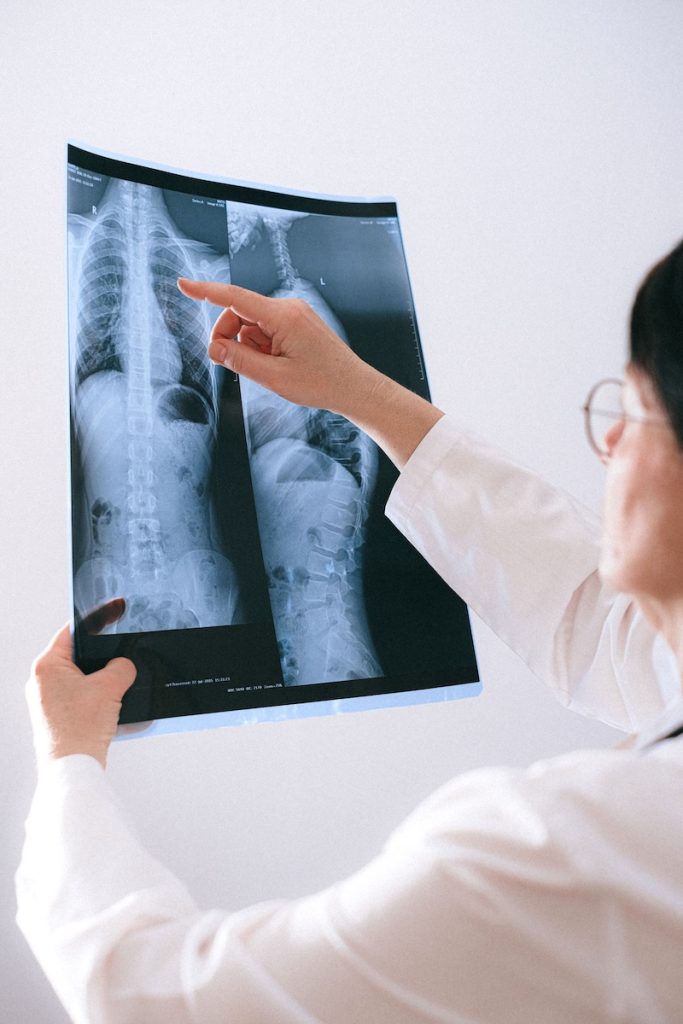
- In-office musculoskeletal ultrasound. We can look directly at the gluteal tendons, the hamstring attachment, the bursae, and the nerves in the deep gluteal space and groin. For tendon problems in this region, ultrasound frequently answers the question in the room.
- On-site X-ray. Available at the same visit to assess joint space, arthritis, and bony shape changes.
- MRI referral. Arranged when labral pathology, a high-grade tendon tear, or a stress injury needs to be characterized.
- Diagnostic injections. Sometimes the most reliable way to identify a pain source is to numb it. A targeted block that relieves your pain tells us something no scan can, and it is especially valuable when several structures could plausibly be responsible.





Treatment Options for SI Joint & Hip Pain at HDSS
Treatment follows the diagnosis. Tendon, joint, and nerve problems in this region call for genuinely different approaches.
Image-Guided Injections
Every injection we perform uses real-time imaging guidance. In the hip and pelvis, this is not a refinement; it is a requirement. The hip joint is deep, the SI joint is narrow and irregular, and the targets in the deep gluteal space sit next to the sciatic nerve. Injections placed without guidance in this region miss frequently.
Diagnostic Blocks
A targeted anesthetic injection used to confirm which structure is generating your pain. Particularly valuable for the SI joint, the hip joint, and suspected nerve entrapment, and often the step that resolves a diagnosis that has been unclear for months.
Radiofrequency Ablation for SI Joint Pain
For SI pain confirmed by diagnostic block, ablation of the small sacral nerves supplying the joint can interrupt pain signals for a considerably longer period than injection alone.
Nerve Hydrodissection
Precisely placed fluid separates an irritated or tethered nerve from the tissue restricting it. Relevant for deep gluteal nerve entrapment, cluneal nerve pain, border nerve pain in the groin, and nerve adhesions after pelvic or hip surgery.
PRP Therapy
Platelet-rich plasma delivered into a degenerated tendon or an arthritic joint under imaging guidance. Most relevant for chronic gluteal and hamstring tendinopathy and for early to moderate hip arthritis and SI joint. Results develop over weeks to months.
Shockwave Therapy (ESWT)
Acoustic energy delivered to chronic tendon tissue. Gluteal and proximal hamstring tendinopathy are both established applications. No downtime, performed in the office.
Percutaneous Tenotomy
For tendons with established degeneration, a small ultrasound-guided needle breaks up disorganized tissue and prompts a healing response.
MLS Laser Therapy
Non-invasive light therapy to reduce inflammation and support recovery, used as an adjunct alongside other treatment.
Loading and Rehabilitation
For tendon problems in this region, progressive loading has the strongest evidence. We build it into the plan and coordinate with physical therapists across Central Oregon rather than treating it as an afterthought.
Coordination of Care
Advanced hip arthritis, symptomatic labral tears that need arthroscopic repair, and full-thickness gluteal tendon tears need surgical evaluation. We coordinate directly with orthopedic surgeons in Central Oregon.
Who May Benefit from Specialty Hip & SI Care
An evaluation at High Desert Sports & Spine may be worth considering if you:
- Cannot sleep on your affected side without pain
- Have been treated for sciatica or low back pain without improvement
- Were told you have bursitis and a cortisone injection did not hold
- Have deep buttock pain that gets worse the longer you sit
- Have groin pain that is limiting walking, pivoting, or your sport
- Have been told you need a hip replacement and want to understand what comes before it
- Have groin or lower abdominal pain that began after pelvic or hernia surgery
- Have an MRI finding but no clear explanation of why you hurt




Why Choose High Desert Sports & Spine for SI Joint & Hip Pain in Bend, OR?
We Treat the Hip and the SI Joint Together
Most practices split these. Hip pain goes to an orthopedic surgeon, and SI pain goes to a spine or pain practice. Patients don’t experience it that way, and the two are constantly confused with each other. Evaluating both in one visit is how you avoid spending months in the wrong clinic.
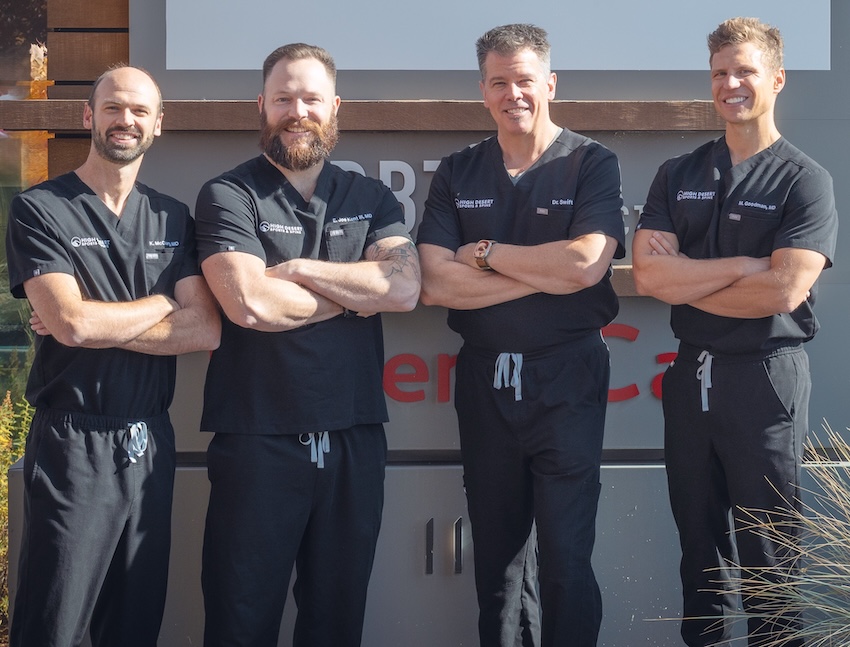
Fellowship-Trained, Board-Certified Physicians
Our physicians completed fellowship training in sports medicine, musculoskeletal medicine, or interventional spine care after medical school and residency. That range lets a single evaluation cover the joint, tendon, nerve, and spine as possible sources.
Diagnosis Before Treatment
In this region, the diagnosis is the hard part. We use examination, ultrasound, and, where needed, diagnostic blocks to identify the pain source before committing to a treatment plan built around it.
Image-Guided Precision
Every injection uses real-time ultrasound or fluoroscopic guidance. The structures here are deep, narrow, and sit close to major nerves. Guidance is standard at HDSS, not an upgrade.
Honest About What the Evidence Supports
For gluteal tendinopathy, progressive loading has better long-term support than injection, and we will tell you that even though it means recommending something we do not bill for. Where interventional treatment adds value, we will explain exactly why.
Same-Week Access
New patient appointments are typically available within a week. For acute injuries, our Orthopedic Urgent Care offers same-day or next-day evaluation. We serve Bend, Redmond, Sisters, Prineville, La Pine, and Sunriver.
What to Expect at Your Hip & SI Joint Evaluation
- Specialty evaluation. History, symptom mapping, prior treatment, any imaging you have, and what you are trying to get back to.
- Hands-on exam and in-office imaging. Physical examination plus ultrasound or X-ray as indicated, during the same visit.
- Clear diagnosis and options. You will understand which structure we believe is responsible and how confident we are. Where a diagnostic block is the honest next step, we will say so instead of guessing.
- A plan you agree with. Including the rehabilitation side, not just the procedural side. No pressure and no upsell.
- Follow-up. We track your response and adjust. In this region, how you respond to a targeted injection is itself diagnostic information that shapes what comes next.

SI Joint & Hip Pain Treatment in Bend, Oregon: Schedule an Evaluation
If hip or buttock pain has been treated as something else without improvement, the next step is to find out what is actually causing it.
We will examine you thoroughly, use ultrasound to look at the structures involved, and give you an honest read on what is going on and what your options are.
Same-week appointments are typically available for new patients. We serve Bend, Redmond, Sisters, Prineville, La Pine, Sunriver, and patients throughout Central Oregon.
Frequently Asked Questions About SI Joint & Hip Pain in Bend, Oregon
That is the most characteristic symptom of gluteal tendinopathy, the tendon condition on the outside of the hip that used to be called trochanteric bursitis. Lying on the affected side compresses the tendons against the bone. Side sleeping on the opposite side with a pillow between the knees often helps, because letting the top leg drop across the body also compresses those tendons. It is worth having evaluated rather than just rearranging your pillows, since the underlying tendon problem tends not to resolve on its own.
A useful rule of thumb: true hip joint pain is usually felt in the groin, while pain in the buttock and pain that travels down the leg more often comes from the spine, the SI joint, or a nerve in the deep gluteal space. This is a rule of thumb rather than a rule, and many patients have both. A physical exam with specific provocative testing, and sometimes a diagnostic injection, is how the question actually gets settled.
Hip bursitis does exist, but it is much less common than the label suggests. When patients with lateral hip pain are imaged, the majority show tendon changes in the gluteal muscles, and isolated bursitis without tendon involvement is uncommon. That is why the condition is now usually called greater trochanteric pain syndrome. The distinction matters because tendon problems and inflammation problems respond to different treatments.
It may help for a while. The research on corticosteroid injection for this condition is not encouraging over the longer term, with symptom return being common and some evidence of adverse effects on tendon tissue with repeated injection. There is a role for it, particularly when pain is severe enough that you cannot begin meaningful rehabilitation. We use it selectively and will explain the tradeoff rather than presenting it as a solution.
SI joint pain is typically one-sided, centered just below the belt line at a spot you can often point to precisely, and aggravated by rolling over in bed, standing on one leg, and getting out of a car. Because it overlaps so heavily with lumbar pain, examination findings alone are not always conclusive. An image-guided diagnostic injection into the joint is the most reliable confirmation, and it treats the joint at the same time.
Labral tissue has limited blood supply, and torn tissue generally does not reattach on its own. That said, many people with labral tears become symptom-free without surgery through targeted strengthening, activity modification, and addressing the mechanics loading the joint. Labral tears also appear on imaging in plenty of people with no pain at all. Whether yours needs surgical repair depends on your symptoms, function, and goals rather than the MRI report alone.
Several things can cause it, and they often get confused with one another. Proximal hamstring tendinopathy causes pain right at the sitting bone. SI joint pain can refer into the buttock. Irritation of the sciatic nerve in the deep gluteal space, sometimes called piriformis syndrome, produces buttock pain with radiating symptoms that mimic a disc problem. Cluneal nerve entrapment is another possibility. These respond to different treatments, so identifying which one you have is the first order of business.
Not necessarily, and not necessarily yet. Hip replacement is a good operation with reliable results for advanced arthritis, but the decision depends on your symptoms, your function, and how much the hip is limiting your life, not on the severity of your X-ray alone. For early to moderate arthritis, there is meaningful room to work with image-guided injections, orthobiologic options, and targeted strengthening. When you have reached the point where replacement is the right answer, we will tell you and coordinate the referral.
PRP is not covered by health insurance and is an out-of-pocket expense. Coverage varies by payer and continues to evolve. Contact your insurer directly for current information on your plan. Our team can discuss self-pay options during your consultation, and some patients use HSA or FSA funds.
No referral is required. Contact our office directly to schedule an evaluation. Bring any prior imaging or operative reports, as they help us make the most of your first visit.