
Shoulder Pain Treatment in Bend, Oregon
Shoulder pain is one of the most common reasons active adults slow down, and one of the most frequently mismanaged. Rest doesn't fix a rotator cuff tendinopathy. A cortisone shot doesn't resolve calcific tendonitis. And most shoulder problems don't need surgery as the first response.
At High Desert Sports & Spine, our fellowship-trained, board-certified physicians evaluate shoulder pain the way it should be with a thorough specialty exam, imaging when indicated, and a clear explanation of what’s actually going on and what your options are.
We focus on interventional and minimally invasive care for shoulder conditions. That means ultrasound-guided injections, PRP therapy, shockwave therapy (ESWT), and other evidence-informed approaches. If surgery turns out to be the right answer, we’ll tell you and coordinate with the right surgeon. But for most shoulder conditions, there’s meaningful room to work before that decision needs to be made.
If you’re searching for a shoulder specialist in Bend, Oregon, who will actually sit down with you, review your exam and imaging, and walk you through your options without rushing you out, we’re here. Same-week appointments are available for new patients at our convenient Bend location.

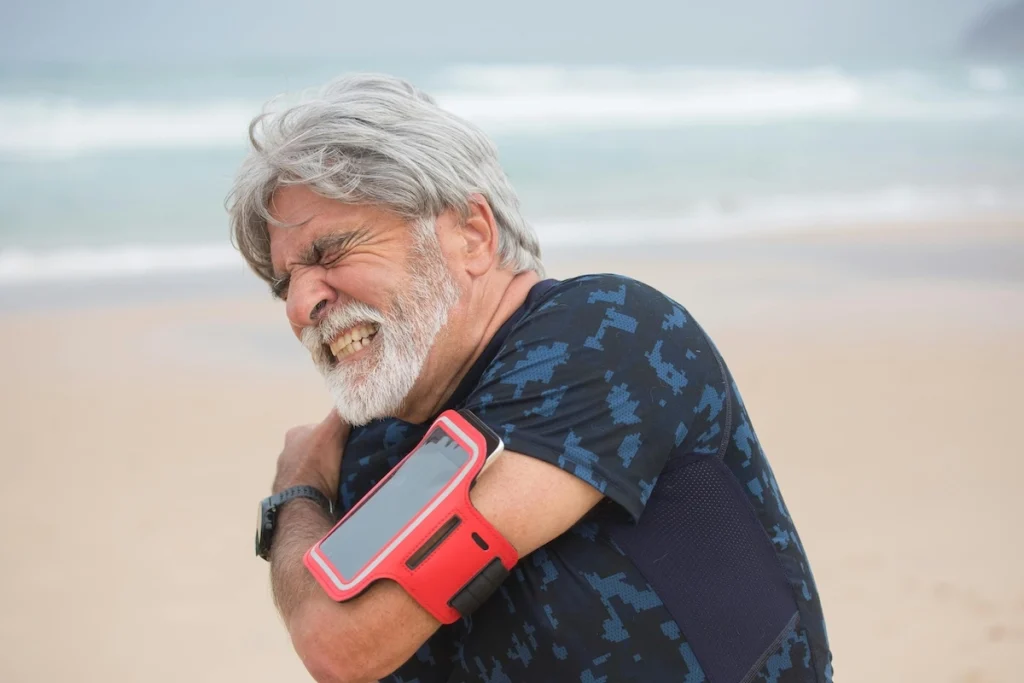
Shoulder Conditions We Evaluate and Treat
Our physicians commonly evaluate and treat the following shoulder conditions at High Desert Sports & Spine in Bend, Oregon:
Rotator Cuff Syndrome and Tears
The rotator cuff is a group of four muscles and their tendons that stabilize the shoulder and power arm movement. Rotator cuff tendinopathy, partial-thickness tears, and full-thickness tears each present differently and are managed differently. Many partial tears and chronic tendinopathies respond well to non-operative care, including injection, PRP, targeted rehabilitation, and shockwave therapy. Full-thickness tears may require surgical repair, but not always immediately. We evaluate each case on its own merits.
Shoulder Bursitis
The subacromial bursa is a small fluid-filled sac that cushions the rotator cuff tendons. When it becomes inflamed from overuse, an acute injury, or mechanical irritation, shoulder pain and range of motion limitations follow. Ultrasound-guided bursal injections are a precise and effective option when conservative measures haven’t resolved the inflammation.
Calcific Tendonitis
Calcium deposits in the rotator cuff tendons can cause acute, severe shoulder pain sometimes arriving without warning. When rest and anti-inflammatory approaches aren’t enough, ultrasound-guided needling and lavage (barbotage) can break up and aspirate the calcium deposit. It’s an in-office, image-guided procedure that’s often highly effective.
Biceps Tendonitis
The long head of the biceps tendon runs through the shoulder joint and is a common source of anterior shoulder pain, especially in overhead athletes and active adults. Tenderness at the front of the shoulder, pain with lifting, and aching into the forearm are typical complaints. Ultrasound-guided injections and PRP may be appropriate depending on the severity and chronicity.
Labral Tears
The labrum is a ring of fibrocartilage that deepens the shoulder socket and adds stability. Labral tears, including SLAP tears, are common in throwers, climbers, and patients who’ve experienced a shoulder dislocation. Many labral tears can be managed non-operatively with targeted strengthening and, in some cases, injections. We’ll evaluate and coordinate the best plan for your specific situation.
Frozen Shoulder (Adhesive Capsulitis)
Frozen shoulder develops when the joint capsule thickens and tightens, progressively limiting movement and causing aching pain at rest and sharp pain at end range. It often occurs in stages: freezing, frozen, thawing, and the right treatment depends on which stage you’re in. Intra-articular injections, hydrodilation, and structured mobilization protocols are the primary minimally invasive tools with a high success rate.
Shoulder Arthritis (Glenohumeral Osteoarthritis)
Arthritis in the shoulder joint causes pain, stiffness, and grinding or clicking with movement. Unlike knee or hip arthritis, where replacement surgery has decades of established outcomes, shoulder arthritis can often be managed for significant periods with injections, activity modification, and orthobiologic support when appropriate.
Overuse and Repetitive Stress Injuries
Pickleballers, climbers, swimmers, paddlers, and CrossFitters’ shoulder overuse injuries are common in the Central Oregon active community. When the shoulder hasn’t had time to recover between sessions, tendons and bursae take the hit. We evaluate the full picture: mechanics, load, tissue health, and what’s actually limiting recovery.
Acute Shoulder Injuries
Sudden shoulder pain from a fall, collision, or acute trauma needs prompt evaluation to rule out fractures, dislocations, and significant structural damage. Our Orthopedic Urgent Care offers same- or next-day evaluation for acute shoulder injuries no ER wait, orthopedic-focused care from the start.
How We Approach Shoulder Pain at High Desert Sports & Spine
Most shoulder pain patients we see have already tried something: rest, anti-inflammatories, maybe a round of physical therapy or a cortisone injection from a primary care provider. Sometimes those things work. When they don’t, the next step is a physician who can dig deeper.
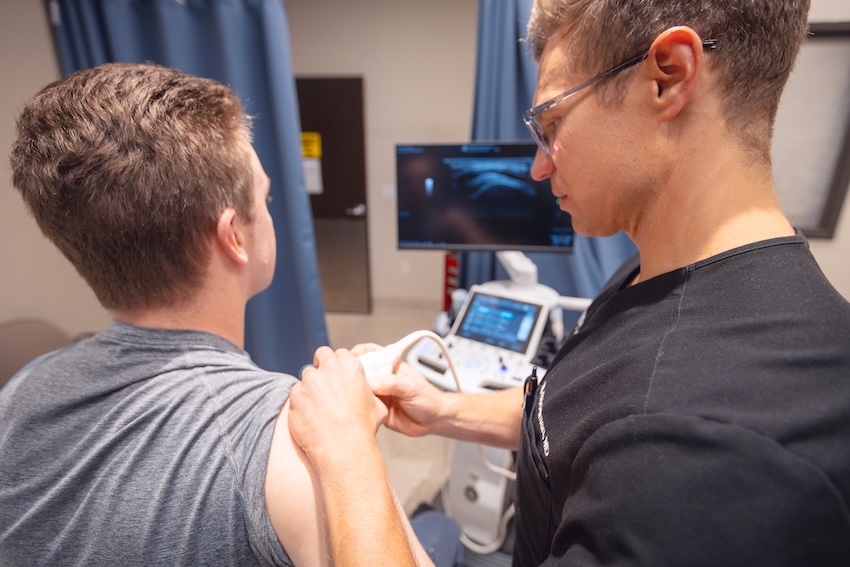
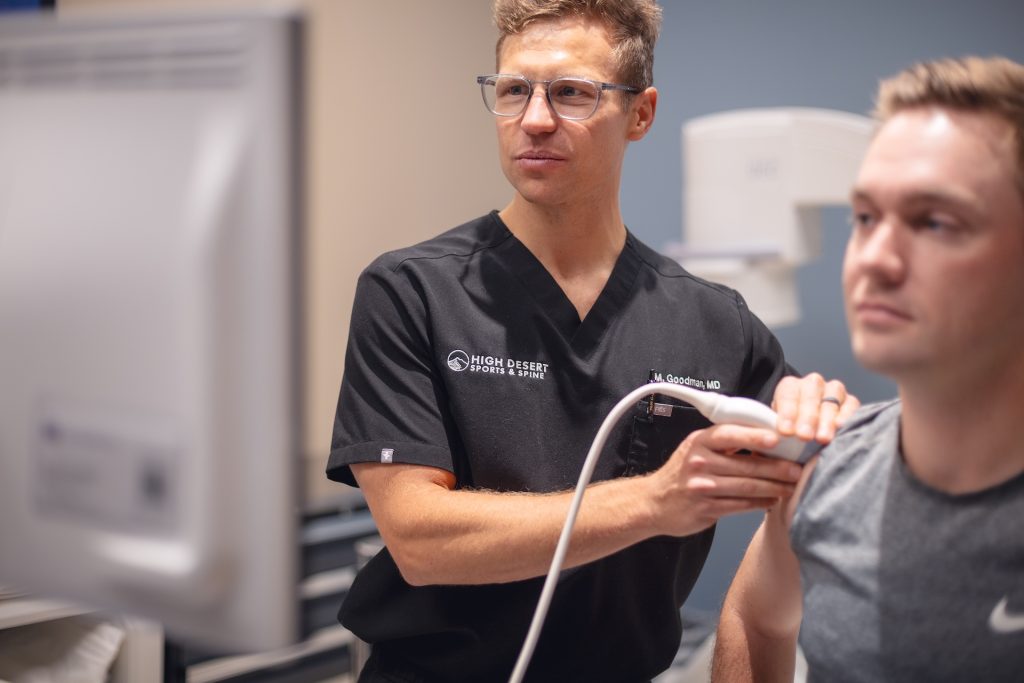
Our evaluation starts with a detailed history and physical exam, reviewing how the pain started, what makes it better or worse, and what your goals are, whether that’s getting back to tennis, sleeping through the night without waking up on your shoulder, or swinging a kayak paddle without wincing. We’ll review any prior imaging you have, and we often use in-office ultrasound to assess soft tissue in real time.
From there, we build a plan. That might mean an ultrasound-guided injection to reduce acute inflammation while you rehab. It might mean an MRI referral to get a clearer structural picture, or a coordinated handoff to a physical therapist when progressive rehab is the right first move. It might mean PRP to support tissue healing in a case of chronic tendinopathy or a partial-thickness rotator cuff tear that hasn’t responded to standard care. It might mean barbotage or shockwave therapy for calcific tendonitis. Or it might mean a referral to a surgeon, which we’ll tell you clearly and coordinate directly.
What it won’t mean is a rushed 7-minute visit where you leave with a generic diagnosis and a prescription refill.



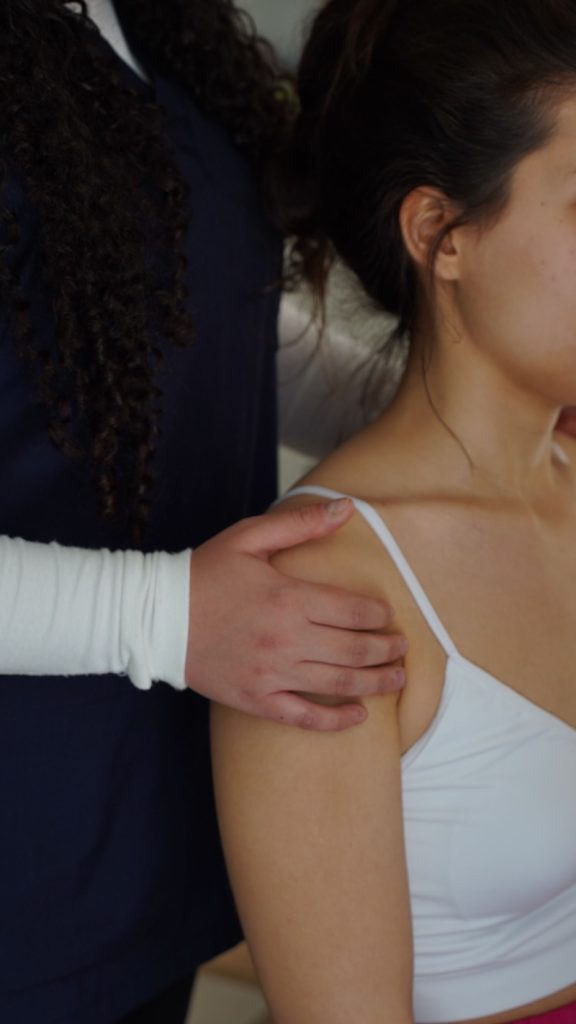

Treatment Options for Shoulder Pain at HDSS
Depending on your diagnosis and goals, your treatment plan may include one or more of the following:
Ultrasound-Guided Injections
Corticosteroid injections remain an appropriate tool for acute inflammation; they reduce pain quickly and create a window for rehabilitation to take hold. All injections at HDSS are performed with real-time ultrasound guidance to ensure accurate placement in the bursa, joint, or tendon sheath. Blind injections miss more often than most patients realize.
PRP Therapy (Platelet-Rich Plasma)
PRP Therapy uses a concentrated portion of your own blood processed to increase the platelet concentration, injected directly into the affected shoulder tissue under ultrasound guidance. Platelets carry growth factors that support tissue repair. PRP is most commonly considered for chronic rotator cuff tendinopathy, partial tears, and shoulder arthritis when cortisone hasn’t provided lasting benefit. It’s not appropriate for every patient or every condition, and we’ll be straight with you about when it makes sense and when it probably doesn’t.
Shockwave Therapy (ESWT)
Extracorporeal shockwave therapy delivers acoustic energy to damaged or calcified tissue to stimulate a healing response. For calcific tendonitis specifically, ESWT has a solid evidence base. It’s also used for chronic rotator cuff tendinopathy and shoulder impingement syndromes. The procedure is in-office, non-invasive, and requires no recovery time.
Medical Laser Therapy
High-intensity medical laser therapy uses light energy to reduce inflammation and support cellular repair. It’s a useful adjunct for acute shoulder injuries and chronic soft tissue conditions, particularly when patients want an active treatment that doesn’t involve needles.
Barbotage (Ultrasound-Guided Needling and Lavage for Calcific Tendonitis)
For calcific deposits in the rotator cuff tendons, ultrasound-guided barbotage is a targeted in-office procedure that breaks up and aspirates calcium deposits. It’s often effective when ESWT or cortisone haven’t resolved the problem.
Coordination of Care
When a shoulder condition requires surgical evaluation or reconstruction, full-thickness rotator cuff repairs, labral stabilization surgery, or shoulder replacement, we coordinate directly with orthopedic surgeons in Central Oregon. You won’t be left to figure out the referral process on your own.
Who May Be a Good Candidate for Minimally Invasive Shoulder Care?
Minimally Invasive shoulder care is worth exploring if you:
- Have a rotator cuff, tendon, or joint condition that hasn’t resolved with rest, anti-inflammatories, or prior physical therapy
- Want to explore interventional options before committing to surgery
- Have found limited or short-lived relief from cortisone injections and are looking for something that addresses the underlying tissue
- Are active or athletic and want to return to sport or recreation as efficiently as possible
- Have been told you need surgery but want a second opinion from a non-operative specialist
- Have an acute shoulder injury that needs fast, orthopedic-focused evaluation
Non-operative care is not the right path for everyone. Some shoulder conditions, particularly large, symptomatic full-thickness rotator cuff tears in younger patients, or shoulder instability with repeated dislocations, are best addressed surgically. We’ll tell you which category you fall into, and we’ll tell you early.


Why Choose High Desert Sports & Spine for Shoulder Pain in Bend, OR?
Fellowship-Trained, Board-Certified Physicians
Our physicians completed fellowship training in sports medicine, musculoskeletal medicine, or interventional spine care on top of medical school and residency. That’s a meaningful distinction. Not every provider treating shoulder pain in Bend holds an MD or has fellowship-level specialization in musculoskeletal care. When you’re deciding where to take your shoulder, the physician’s training and scope matter.
Ultrasound-Guided Precision
Every injection performed at HDSS uses real-time ultrasound guidance. Blind injections, delivered without imaging, are less precise. For the shoulder, accurate placement matters: the subacromial bursa, glenohumeral joint, and biceps tendon sheath are distinct targets. We don’t guess.
Interventional Tools Most Primary Care Can’t Offer
PRP therapy, shockwave (ESWT), medical laser, and image-guided barbotage are available in-office. You don’t have to navigate multiple referrals to access them. We evaluate appropriateness and perform treatment within the same practice.
Same-Week Access
New patient appointments are typically available within a week. For urgent shoulder injuries, our Orthopedic Urgent Care offers same- or next-day evaluation. We serve Bend, Redmond, Sisters, Prineville, La Pine, Sunriver, and patients throughout Central Oregon.
An Honest Assessment Over a Sales Pitch
We’ll tell you when a treatment isn’t the right fit and what is. If your shoulder condition requires surgery, we’ll say so and get you to the right surgeon. If it doesn’t, we’ll work through the non-operative options systematically. Either way, you’ll leave with a clear picture of your situation.
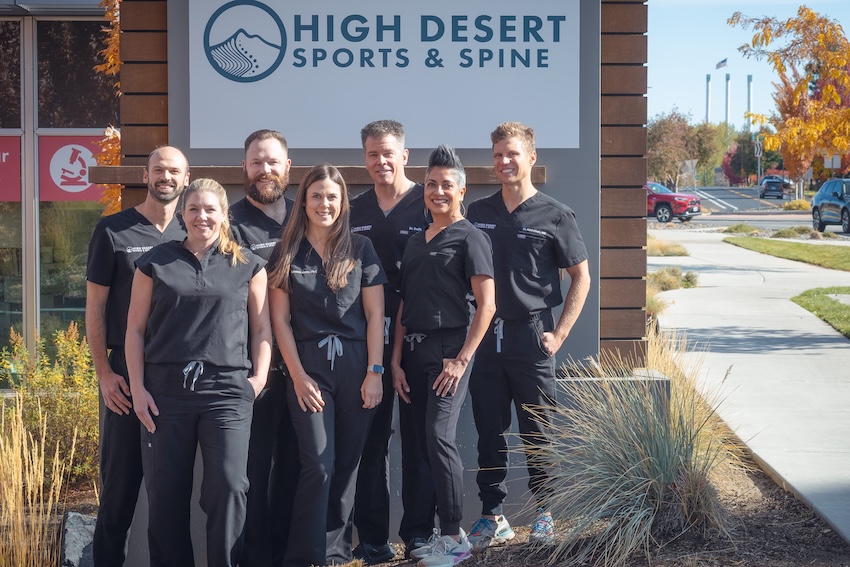
Shoulder Pain Treatment in Bend, Oregon — Get Started
If you’re looking for a shoulder specialist in Bend, Oregon, who takes the time to actually evaluate your problem and walk you through what’s going on, High Desert Sports & Spine is here.
We serve patients across Central Oregon, including Bend, Redmond, Sisters, Prineville, La Pine, and Sunriver. Same-week appointments are usually available for new patients.
Call to schedule a consultation or request an appointment online. We’ll start with a thorough evaluation and give you a clear picture of your options.
Frequently Asked Questions About Shoulder Pain Treatment in Bend, Oregon
Many shoulder conditions respond well to non-operative care, including rotator cuff tendinopathy and partial-thickness tears, shoulder bursitis, calcific tendonitis, biceps tendonitis, frozen shoulder, early to moderate glenohumeral arthritis, and chronic overuse conditions. Not every condition fits this category, and we evaluate candidacy carefully. Some conditions, particularly large full-thickness rotator cuff tears in younger patients or recurrent shoulder instability, are better served by surgery.
In most cases, it doesn’t, at least not immediately. Surgery is generally considered after a thorough evaluation, appropriate non-operative care, and a clear understanding of what the structural problem is and how it’s affecting function. A specialty evaluation with a fellowship-trained physician is the right starting point. We’ll give you an honest picture of whether conservative management makes sense for your situation.
Orthopedic surgeons are trained to perform surgical repair of shoulder structures, such as rotator cuff reconstruction, shoulder replacement, labral stabilization, etc. Sports medicine physicians and interventional orthopedic specialists focus on non-operative evaluation and management, using ultrasound-guided procedures, orthobiologics, and rehabilitation approaches to address shoulder problems without surgery. The two approaches are complementary at HDSS; we provide the non-operative side and coordinate surgical referrals when appropriate.
PRP is most commonly considered for chronic rotator cuff tendinopathy and partial-thickness tear conditions where the tissue is degenerated or slow to heal rather than fully ruptured. The evidence is strongest in this category. PRP is less commonly used for large, full-thickness tears, which may require surgical repair first. A thorough evaluation, including imaging review, is necessary to determine whether PRP is appropriate for your specific tear.
PRP is not covered by health insurance and is an out-of-pocket expense. Coverage varies by payer and continues to evolve. We recommend contacting your insurer directly for the most current information on your plan. Our team can discuss self-pay options during your consultation. Some patients use HSA or FSA funds; check your plan details.
Shockwave therapy delivers acoustic energy to damaged or calcified tissue to stimulate a healing response. It’s well-supported by clinical evidence for calcific tendonitis of the shoulder and calcium deposits in the rotator cuff tendons, and has a role in chronic rotator cuff tendinopathy. The procedure is in-office and non-invasive. Most patients tolerate it well. We’ll evaluate whether your shoulder condition is a good candidate during your consultation.
It depends on the severity, how long you’ve had it, and how your body responds to treatment. Mild tendinopathies with consistent rehabilitation can resolve in weeks to months. Chronic tendinopathies the kind that have been building for a year or more typically take longer and may benefit from interventional support like PRP or ESWT to restart the healing process. We’ll set clear, realistic expectations based on your specific situation.
Frozen shoulder (adhesive capsulitis) involves thickening and contraction of the shoulder joint capsule, resulting in progressive stiffness and pain. Treatment depends on the stage. Early on, intra-articular corticosteroid injections combined with mobilization can slow progression and reduce pain. Hydrodilation, injecting saline under pressure to stretch the capsule, is another option. Most patients recover fully over 12 to 18 months with appropriate management, though the timeline varies.
No referral is required. You can contact our office directly to schedule a consultation and evaluation. We serve Bend, Redmond, Sisters, Prineville, La Pine, Sunriver, and patients throughout Central Oregon.
Persistent pain after shoulder surgery is more common than most patients realize. We evaluate post-surgical shoulder pain and can often offer interventional or regenerative options to support ongoing recovery. A thorough evaluation including a review of your operative report and prior imaging helps us understand what’s contributing to the continued symptoms.
Our Orthopedic Urgent Care offers same- or next-day appointments for acute shoulder injuries. If you’ve had a sudden fall, collision, or acute trauma and are concerned about a fracture, dislocation, or significant structural injury, we can evaluate you promptly without the ER wait and without the delay of waiting weeks for a specialist appointment.