
Low Back Pain Treatment in Bend, Oregon
At High Desert Sports & Spine, our fellowship-trained, board-certified physicians evaluate and treat low back pain in Bend, Oregon, with a focus on non-operative and interventional options.
Low back pain is the most common musculoskeletal complaint there is, and it is also one of the most poorly explained. Most people who come to us have been told some version of “it is arthritis” or “you have a disc problem” without anyone identifying which structure is actually generating the pain.
That distinction matters more than almost anything else. The lower back has several potential pain sources, and they respond to completely different treatments. A disc problem, a facet joint problem, an SI joint problem, muscles, and a compressed nerve can all produce pain in roughly the same area. Treating the wrong one is why a lot of people cycle through care without improving.
At High Desert Sports & Spine, our fellowship-trained, board-certified physicians evaluate and treat low back pain in Bend, Oregon, using minimally invasive, image-guided approaches. We start by working out where your pain is coming from, then talk through what can be done about it.
Same-week appointments are usually available for new patients.



When Low Back Pain Is an Emergency
Low back pain is rarely dangerous, but seek emergency care right away if you have:
- New loss of bladder or bowel control, or difficulty starting urination
- Progressive weakness in one or both legs, or a foot that is dragging
These can signal cauda equina syndrome, where timing changes the outcome. Do not wait for an appointment with us or anyone else.
When Low Back Pain Needs a Specialist
Most mild acute low back pain improves within a few weeks with movement, time, and conservative management. Cases worth a specialty evaluation are those that do not follow that pattern.
Consider scheduling an evaluation if you are experiencing:
- Severe back pain after a fall or lifting
- Back pain that has lasted more than 6 weeks without meaningful improvement
- Pain, numbness, or tingling that travels into the buttock, thigh, calf, or foot
- Pain that is worse with standing and walking and eases when you sit or lean forward
- Pain that is worse with sitting and improves when you stand up
- Back pain that keeps returning in episodes, each one a little harder to recover from
- Pain that is limiting your work, your sleep, or your sport
- Persistent pain following prior back surgery
- A diagnosis you were given but never had explained to you
Low Back Conditions We Evaluate and Treat in Bend, OR
Herniated Disc (Also Called a Bulging Disc)
The discs between your vertebrae have a tough outer layer and a softer center. A herniated disc happens when the outer layer tears and inner material pushes outward. If that material contacts a nearby nerve root, it can cause pain, numbness, tingling, or weakness that travels down the leg.
People often call this a bulging disc. A bulging disc describes a related but less severe change in which the disc extends outward without a tear.
Most lumbar disc herniations or bulges improve without surgery over months. Interventional options can reduce the pain during that window, which often makes the difference and allows people to function or manage the pain while the body heals.
Sciatica
Sciatica is a general term for pain that runs from the lower back through the buttock and down the leg. People describe it as electric, burning, or shooting, and it is frequently worse than the back pain itself.
Sciatica is a symptom, not a diagnosis. It tells you a nerve is irritated. It does not tell you why. The cause might be a disc herniation, stenosis narrowing the nerve’s exit, bone spurs, or, less often, irritation of the nerve outside the spine entirely. Identifying the cause is the whole point of the evaluation, because treatments differ.
Pinched Nerve (Lumbar Radiculopathy)
Lumbar radiculopathy is the clinical term for a compressed or irritated nerve root in the lower back. Symptoms follow the specific nerve involved, so an L5 nerve produces a different pattern than an S1 nerve. That predictability is useful, because a careful exam can often localize the level before imaging confirms it.
Targeted injections around the affected nerve root serve two purposes here. They reduce inflammation, and because they target one level, the response can also help confirm the diagnosis.
Spinal Stenosis
Stenosis is narrowing of the spaces in the spine where the spinal cord and nerve roots travel. In the lower back, it typically develops gradually with age, from a combination of thickened ligaments, disc changes, and arthritic bone growth.
The classic pattern is leg pain, heaviness, or cramping that comes on with standing and walking and eases within a minute or two of sitting or leaning forward. Patients often notice they can push a shopping cart much farther than they can walk without one, since leaning forward slightly reduces compression.
Interventional options can help manage symptoms in appropriate patients. Severe stenosis with progressive neurologic changes may need surgery, and we will tell you directly if your situation looks like that.
Degenerative Disc Disease
Degenerative disc disease refers to age-related changes in the discs. They lose water content and height over time, which changes how load transfers through the spine and can irritate nearby structures. Plenty of people have significant disc degeneration on imaging and no pain at all. What matters is whether your degenerative changes correlate with your actual symptoms, which your imaging, symptoms, and physical exam help determine. Imaging provides information, but we don’t treat imaging; we treat people, and imaging is only a piece of the puzzle.
When a specific disc has been identified as the source of your pain, orthobiologic injection into the disc may be an option for select patients. This is one of the newer applications in interventional spine care, and the research is at an earlier stage than it is for tendons and joints. It is not the right choice for everyone, particularly when a herniation is compressing a nerve, and candidacy depends on a careful evaluation. We will walk you through what is known, what is not, and whether it makes sense for your situation.
Arthritis of the Spine (Facet Joint Arthropathy)
Facet joints are the small paired joints at the back of each spinal segment that guide and limit motion. Like any joint, they can become arthritic. When they do, they produce localized low back pain that is typically worse with extension, with standing, and after periods of inactivity. It often eases with bending forward.
Facet pain is one of the more treatable causes of chronic low back pain, because it can be confirmed diagnostically and then addressed with a durable option. Diagnostic blocks can locate the joints causing pain, and injections (steroids, PRP, stem cells) or radiofrequency ablation can provide long-term relief.
For select patients, orthobiologic injection into the facet joint is another option. Rather than interrupting the pain signal, the goal is to support the joint tissue itself. It may be worth discussing if you want to explore an alternative to repeated steroid injections, or if ablation is not the right fit for you. We will be direct about where the research stands and whether you are a reasonable candidate.
Sacroiliac (SI) Joint Pain
The SI joints connect the base of the spine to the pelvis, and they are a common source of low back and/or buttock pain. If your pain sits just below the belt line off to one side, or gets worse rolling over in bed or getting out of a car, the SI joint is worth ruling in or out.
Our SI joint pain page covers the symptoms, how we confirm the diagnosis, and what treatment involves.
Vertebral Compression Fractures
A compression fracture is a collapse of part of a vertebral body, most often caused by osteoporosis. It can happen with a minor fall, a lift, or sometimes no identifiable event at all. The pain is usually sudden, severe, localized to one spot in the mid or lower back, and worse with sitting, standing, and walking.
For fractures that cause severe pain, kyphoplasty is a minimally invasive procedure that stabilizes the fractured vertebra and can produce rapid relief. It is performed on an outpatient basis.
Chronic Low Back Pain After Surgery
Persistent or returning pain after lumbar surgery is common enough to have its own names, including post-laminectomy syndrome and failed back surgery syndrome. Scar tissue, changes at the levels adjacent to a fusion, and incomplete resolution of the original nerve irritation all contribute.
This population is a significant part of our practice. A specialty evaluation, including your operative reports and prior imaging, helps clarify what is causing the pain now, which is often not the same as what caused it before surgery. Interventional options, including targeted injections and, in selected cases, spinal cord stimulation, may be appropriate.
Back Pain From Weak Back Muscles
Multifidus muscle atrophy or dysfunction is an under-recognized and often overlooked cause of low back pain. Your multifidus muscles stabilize your spine, and after a back injury or normal age-related muscle loss, they may not adequately support your discs and joints, leading to back pain.
Symptoms often include progressive back pain with standing, especially when standing still at a counter preparing a meal or brushing your teeth, and they generally improve with relaxation and lying down. Physical therapy can help, but often time is not enough, and it can ironically flare back pain because of the lack of support for all the joints and discs in your back.
Reactiv8 peripheral nerve stimulation is a new, restorative procedure that strengthens and re-engages your back muscles so they can support your body and your activities.








How We Diagnose Low Back Pain
This is where the real work happens, and it is what most low back care skips.
A typical evaluation includes:
- History and symptom review. When it started, what positions and activities make it better or worse, where exactly it travels, what you have already tried, and what you are trying to get back to. Positional patterns carry more diagnostic weight than most patients realize.
- Physical examination. We assess range of motion, strength, reflexes, sensation, nerve tension, and specific provocative maneuvers for the SI joint, facet joints, discs, and low back muscles. This helps us narrow down which structure is involved before interpreting imaging.
- Review of prior imaging. Bring any X-rays, MRI, or CT you have. We read them and see if they match your symptoms, which matters because degenerative findings are extremely common in people with no pain whatsoever. An abnormal MRI does not automatically identify the source of your pain.
- Additional imaging when warranted. On-site X-ray is available. MRI referrals are arranged when the clinical picture calls for it.
- Electrodiagnostic testing. Nerve conduction studies or EMG can help identify which nerve is affected and how significantly when that is not clear from exam and imaging.
- Diagnostic injections. Sometimes the most reliable way to confirm a pain source is to numb it and see what happens. A diagnostic block that relieves your pain tells us something imaging cannot.
You will leave understanding which structure we believe is generating your pain, how confident we are, what the options are, and what we recommend.
Low Back Pain Treatment Options in Bend at HDSS
Treatment follows the diagnosis. What works for facet-mediated pain isn’t appropriate for a compressed nerve root, and neither is appropriate for an SI joint problem.
Before the procedure list, two things worth stating clearly.
First, we do not prescribe or manage opioid pain medications. Our approach to back pain is procedure-based and targeted at the structure causing the problem.
Second, movement and progressive rehabilitation are part of nearly every plan we build. Interventional treatment often works best by creating a window for rehabilitation. We coordinate closely with physical therapists across Central Oregon.
Epidural Steroid Injections
Anti-inflammatory medication delivered into the epidural space near an irritated nerve root, under fluoroscopic guidance. Most relevant for radiating leg pain from disc herniation or stenosis.
Facet Joint Injections and Medial Branch Blocks
Injections into or around the facet joints, used to both confirm the joint as the pain source and provide relief.
Radiofrequency Ablation
For confirmed facet-mediated pain, heat energy interrupts the small nerves carrying pain signals from the arthritic joint. This is one of the more durable minimally invasive options for chronic low back pain.
Selective Nerve Root Blocks
A targeted injection at one specific nerve root, useful when several levels look abnormal on imaging and we need to identify which one is symptomatic.
Kyphoplasty
A minimally invasive outpatient procedure that stabilizes a painful vertebral compression fracture. This is done in the office with IV sedation and quickly relieves severe pain from back fractures and restores function.
Spinal Cord Stimulation
For chronic pain that has not responded to other interventional care, particularly persistent pain after prior spine surgery, a small implanted device modifies how pain signals are processed. The process begins with a temporary trial so you can assess real-world relief before committing to a permanent implant. Our physicians have advanced fellowship training in neuromodulation.
Reactiv8 Restorative Stimulation
Retrains and strengthens your back muscles to support the joints and discs along your spine. This helps people stand and walk for longer periods while reducing back pain.
Basivertebral Nerve Ablation
A new radiofrequency ablation procedure that permanently treats pain from degenerative disc disease. This outpatient surgical procedure treats a very specific type of low back pain.
Sacroiliac Joint Fusion
For those patients with long-term sacroiliac joint pain, where injections don’t provide long enough relief, the joints can be fused together to permanently treat the pain. This is a minimally invasive surgery that prevents abnormal motion of the joints, which is the underlying cause of SI joint pain. The surgery is outpatient and typically does not require general anesthesia.
Minimally Invasive Lumbar Decompression (MILD)
In patients with symptomatic spinal stenosis causing leg pain, MILD is a minimally invasive procedure to create more space for pinched nerves. It is done with anesthesia support and offers patients a low-risk way to remove pressure on the nerves without traditional open spine surgery. This minimizes damage to other spinal structures and supports a quicker recovery.
Intradiscal Injection
Another option for patients with symptomatic degenerative discs, intradiscal platelet-rich plasma (PRP) can restore disc hydration, improve back pain, and reduce stiffness.
Shockwave Therapy and Medical Laser
For selected cases where soft tissue is the primary driver of mechanical back pain, these non-invasive options may be used alongside rehabilitation to speed recovery.
Coordination of Care For Low Back Pain Treatment
Progressive neurologic deficits, significant instability, and severe stenosis that has stopped responding to interventional care need surgical evaluation. We coordinate directly with spine surgeons in Central Oregon rather than leaving you to arrange it.





Who May Benefit from Specialty Low Back Care
An evaluation at High Desert Sports & Spine may be worth considering if you:
- Have severe back pain, or back pain for more than 6 weeks without meaningful improvement
- Have pain, numbness, or weakness traveling into your leg
- Have been given a diagnosis from an MRI report but no clear explanation of what is causing your pain
- Have tried physical therapy, chiropractic care, or medication without lasting benefit
- Are looking for minimally invasive options before considering back surgery
- Have persistent pain following prior lumbar surgery
- Want an accurate diagnosis before committing to any treatment plan
If your pain is improving and has no leg symptoms, staying active and giving it a few more weeks is still reasonable. We will tell you if that is where you are at.
Why Choose High Desert Sports & Spine for Low Back Pain in Bend, Oregon?
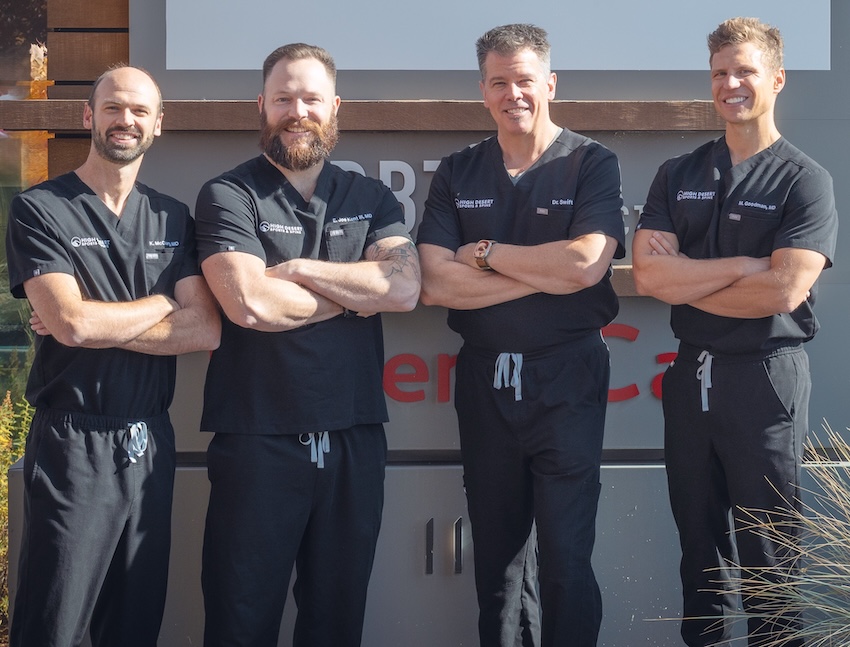
Fellowship-Trained Interventional Spine Physicians
Our physicians completed fellowship training specifically in interventional spine and musculoskeletal medicine. That training lets us distinguish a facet problem from an SI problem or a nerve root problem, decide which level to target, and interpret your imaging against your symptoms rather than in isolation.
Diagnosis Before Treatment
We do not lead with a procedure. Low back pain has several possible sources, and they respond differently. Working out which one applies to you is the part that determines whether anything else works.
Image-Guided Precision
Every spine procedure we perform uses fluoroscopic or ultrasound guidance. Real-time imaging confirms the target and the needle position before medication is delivered. At HDSS, this is standard rather than optional.
Procedure-Based, Not Medication-Based
We do not prescribe or manage opioid pain medications. Our focus is on identifying the structural source of your pain and treating it directly.
Honest About Surgery
Some low back conditions need a surgeon, and we will say so plainly and coordinate the referral. What we will not do is push you toward a procedure you do not need, or steer you away from surgery when it is genuinely the right answer for your situation.
Same-Week Access
New patient evaluations are typically available within a week. For anyone dealing with acute or worsening back symptoms, waiting months to be seen is not reasonable care. We serve Bend, Redmond, Sisters, Prineville, La Pine, and Sunriver.


What to Expect at Your Low Back Pain Evaluation
- Intake and history. We review your symptoms, imaging, and prior treatment before your visit so your appointment time goes toward what matters.
- Physical examination. A thorough exam covering motion, neurologic function, and provocative testing for the facet and SI joints. This, not imaging alone, is how we localize the problem.
- Clear explanation. You will leave understanding what we believe is causing your pain and why. Where something is uncertain, we will say so rather than guessing confidently.
- Treatment decision. We discuss whether an interventional procedure is appropriate, when it would be scheduled, and what to expect from it. Procedures are almost always scheduled as a separate visit.
- Follow-up plan. We track your response, coordinate rehabilitation, and adjust. A diagnostic injection that did not relieve your pain is still useful information and changes what we do next.
Low Back Pain Treatment in Bend, Oregon: Schedule an Evaluation
If low back pain is limiting your work, your sleep, or the things you like to do, the first step is finding out what is actually causing it.
We will examine you thoroughly, review your imaging against your symptoms, and give you an honest read on what is going on and what your options are. No pressure to proceed with anything you are not ready for.
Same-week appointments are typically available for new patients. We serve Bend, Redmond, Sisters, Prineville, La Pine, Sunriver, and patients throughout Central Oregon.
Frequently Asked Questions About Low Back Pain in Bend, Oregon
See a specialist if your pain has lasted more than 6 weeks without improving, if it travels into your leg, if you have numbness or weakness, or if it keeps returning in episodes. Seek emergency care immediately for loss of bladder or bowel control, or progressive leg weakness, since those can indicate a condition where timing affects the outcome.
Not always, and getting one early does not necessarily help. Degenerative findings such as disc bulges and arthritis are extremely common in people with no pain at all, which means an MRI can easily identify something abnormal that is not actually causing your symptoms. Imaging is most useful when interpreted alongside a careful history and physical exam. We order it when the clinical picture calls for it, and we review prior imaging in the context of what you are actually feeling.
Most people do not. The majority of lumbar disc herniations improve over a period of months without surgery, and interventional treatment can reduce nerve inflammation during that window. Surgery is generally considered when symptoms are severe, when weakness is progressing, or when a thorough course of non-operative care has not worked. If your situation calls for a surgeon, we will tell you and coordinate the referral.
Low back pain is localized to the lumbar region. Sciatica is pain that travels along the sciatic nerve into the buttock and down the leg, often described as electric or shooting. Sciatica indicates nerve irritation, which usually points to a more specific structural cause and a different treatment approach. Many patients have both.
The effect typically lasts from six to eighteen months, though it varies by individual. Because the nerves regenerate over time, the procedure can generally be repeated. Radiofrequency ablation requires prior confirmation with diagnostic medial branch blocks, so there are steps before the ablation itself.
For some patients, yes. Orthobiologic injections such as PRP can be used in the facet joints and, for select patients, in a disc that has been identified as the pain source. The research supporting facet joint treatment is further along than the research for disc treatment, and in both cases candidacy matters a great deal. PRP is not a substitute for an accurate diagnosis. It is only useful once we know which structure is responsible for your pain.
We do not prescribe or manage opioid pain medications. Our approach is procedure-based and focused on identifying and treating the structural source of your pain. If medication management is what you are looking for, we are not the right practice, and we would rather tell you that upfront than waste your time.
Most major insurance plans cover many interventional spine procedures, including epidural steroid injections, facet joint injections, medial branch blocks, and radiofrequency ablation, when medical necessity criteria are met. Coverage varies by payer, plan, and procedure. Our team can help verify your benefits before anything is scheduled. Orthobiologic treatments such as PRP are the exception. They are not covered by health insurance and are an out-of-pocket expense, and our team can discuss self-pay options during your consultation.
For most low back pain, staying active is better than resting. Prolonged bed rest tends to slow recovery rather than speed it. That said, “stay active” does not mean pushing through activities that clearly aggravate your symptoms. Part of what we do is help you figure out which movements help and which make things worse, depending on what is causing your pain.
No referral is required. Contact our office directly to schedule an evaluation. Bring any prior imaging, operative reports, or nerve testing you have, since it helps us make the most of your first visit.