
When you choose an orthopedic clinic in Bend, you trust a team with your pain, mobility, and long‑term independence. At High Desert Sports & Spine, we want you to understand how American Board of Orthopaedic Surgery (ABOS) certification shows which surgeons meet nationally recognized standards for safe, effective musculoskeletal care.
What ABOS Certification Actually Is
The ABOS is the national organization that certifies orthopedic surgeons based on education, knowledge, surgical skills, and professional behavior—not just a medical license. To even enter the pathway, a surgeon must complete medical school and a five‑year orthopedic surgery residency at an ACGME‑approved program in the U.S. or Canada. You can see how ABOS describes these expectations in its overview of highest standards.
During residency, surgeons train in joint replacement, fracture care, sports injuries, spine conditions, trauma, and patient safety. When you come to us in Bend, choosing an ABOS‑certified surgeon means you are seeing someone who has been evaluated on real orthopedic decision‑making long before treating you independently.
You may see “Board Eligible” and “Board Certified” used side by side, but they are different. A surgeon becomes Board Eligible after passing the ABOS Part I written exam; full Board Certified status only comes after additional practice requirements and a rigorous oral exam based on real cases from their own surgical log. If you want to see how ABOS explains this path, you can review its page on board certification.
If you ever want to confirm a surgeon’s status, ABOS offers a public tool where you can check an orthopaedic surgeon and learn what board certification means from a patient’s perspective.
How Orthopedic Surgeons Earn ABOS Certification
ABOS initial certification follows a stepwise process that reflects how surgeons grow into trusted specialists.
To achieve full ABOS board certification, surgeons must:
-
Complete five years of orthopedic residency at an accredited program.
-
Pass the Part I computer‑based exam covering general orthopedics and basic science.
-
Practice for a defined period and submit a six‑month surgical case list with at least 35 operative cases.
-
Pass the Part II oral exam, where experienced examiners question them on selected real cases from that list.
For the oral examination, ABOS reviewers look at documentation, imaging, decision‑making, and outcomes, not just technical details. The American Orthopaedic Society for Sports Medicine has highlighted how this method ensures examiners evaluate real practice patterns, not just exam scores. As a result, when you choose an ABOS‑certified surgeon, you are choosing someone who has proven they can apply their knowledge safely in real‑world situations, including complex spine, joint, and sports injuries.
Here in Bend—where many of our patients come to us for back pain, sports injuries, arthritis, and work‑related problems—this process helps reduce the chance of inconsistent or unsafe treatment plans before a surgeon earns full certification.
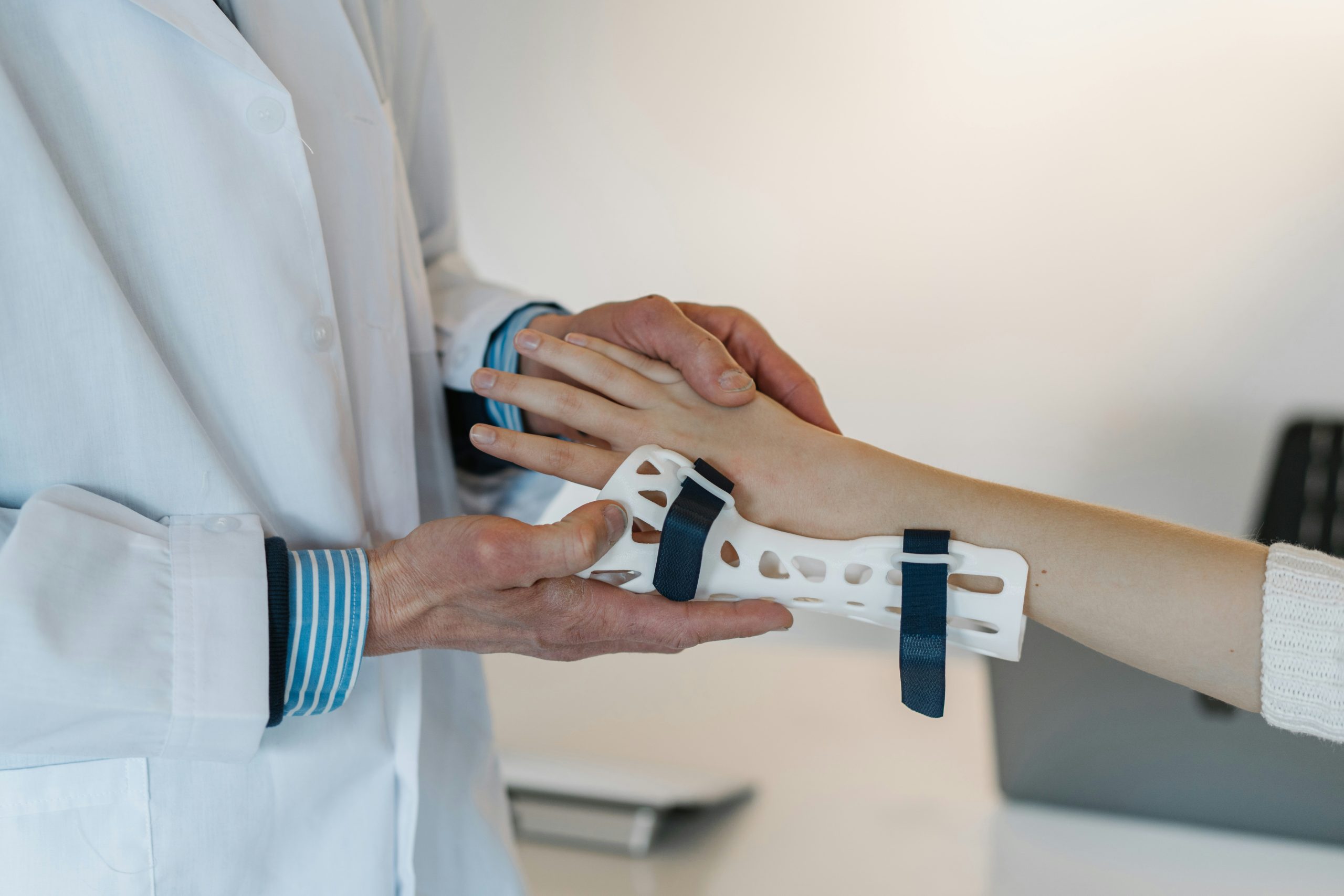
Image credit: Tom Claes on Unsplash
Maintenance of Certification: Staying Current for Central Oregon Patients
We see board certification as a commitment, not a one‑time exam, and ABOS does too. Maintenance of Certification (MOC) keeps orthopedic surgeons on a 10‑year cycle focused on lifelong learning and practice quality.
To remain certified, ABOS diplomates must:
-
Maintain unrestricted medical licenses and hospital privileges (professional standing).
-
Earn 240 hours of Category 1 continuing medical education (CME) every 10 years, including at least 40 hours of scored self‑assessment exams.
-
Complete a knowledge assessment, such as a computer‑based recertification exam or the web‑based longitudinal assessment (ABOS WLA).
-
Participate in practice improvement, informed by peer review and review of their own cases.
The American Academy of Orthopaedic Surgeons notes that MOC functions as a modern recertification program that helps patients identify surgeons who stay current over time. You can read more through AAOS’s overview of maintenance of certification. For you in Bend, an active ABOS certificate tells you that we are committed to recent education in minimally invasive techniques, updated implants, and modern rehab protocols—not just what we learned in residency.
When you compare orthopedic options in Central Oregon, we encourage you to ask whether a surgeon is currently maintaining ABOS board certification, not only whether they were certified once in the past.
Why ABOS Standards Matter for Bend’s Active and Aging Patients
ABOS standards shape the way we care for adults with pain, athletes, workers, seniors, and post‑surgery patients who come to High Desert Sports & Spine.
-
Adults with back, neck, or joint pain benefit because ABOS‑guided training emphasizes accurate diagnosis, imaging interpretation, and non‑surgical management before moving to procedures.
-
Athletes and active Central Oregonians with ACL tears, shoulder dislocations, or overuse injuries gain from ABOS sports medicine pathways that support evidence‑based decisions about surgery versus rehab and safe return‑to‑sport timelines.
-
Workers in physically demanding roles need plans that consider safe return to lifting, bending, and overhead work, which ABOS case review and practice‑improvement expectations help support.
-
Seniors and post‑surgical patients rely on ABOS priorities around fracture management, osteoporosis‑related injuries, joint replacement outcomes, and coordinated rehab, all aimed at preserving mobility and independence.
Here in Central Oregon, many of our patients plan to stay active well into older age. ABOS standards help us align orthopedic decisions with your long‑term function, not just short‑term symptom relief.

Image credit: Tom Claes on Unsplash
How This Connects to Our Care at High Desert Sports & Spine in Bend
At High Desert Sports & Spine in Bend, we focus on orthopedic, spine, and sports medicine care with an orthopedic urgent care model built specifically for bone, joint, muscle, tendon, and ligament injuries. We offer same‑day or next‑day appointments for sprains, suspected fractures, sports injuries, and acute back or neck pain, giving you a specialty alternative to general urgent care or the ER for most musculoskeletal issues. You can learn more on our page for orthopedic urgent care in Bend.
Beyond urgent care, our main orthopedics page outlines how we evaluate chronic joint pain, spine issues, and sports‑related conditions across all activity levels in Bend. When you see us for a torn ligament, herniated disc, or arthritic joint, your plan can be shaped by ABOS‑level standards and our local expertise in the same setting.
Talk with an Orthopedic Team That Follows ABOS‑Level Standards in Bend
Understanding ABOS certification gives you more confidence and better questions as you navigate options for joint pain, spine problems, sports injuries, or post‑surgical recovery. When you choose us in Bend, you are choosing a team committed to rigorous training, continuous education, and transparent, outcome‑driven care.
If you live in Bend or the surrounding Central Oregon communities and want orthopedic care guided by national standards but delivered locally, High Desert Sports & Spine can help you apply this knowledge to your own situation. To schedule an appointment and see how board‑level orthopedic expertise can support your recovery and long‑term mobility, contact the clinic through our secure online form.